
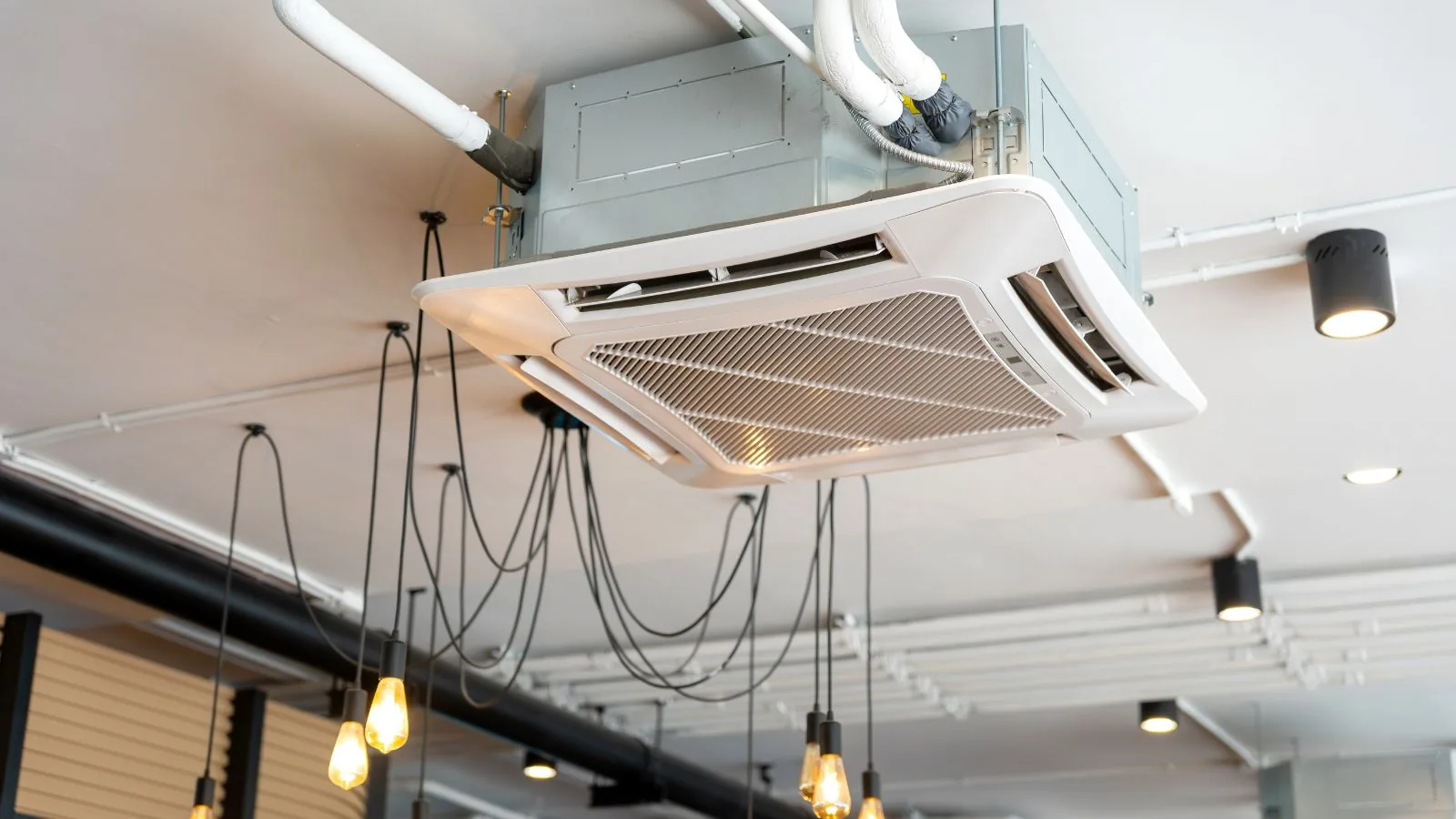
AC leak water damage is the wet drywall, insulation and flooring that follow a failed condensate line or overflowing drain pan on an air conditioner or furnace coil. If a ceiling stain or a damp closet in your Verona home appears when the air conditioner runs, this is the page to read. Cooling equipment makes a surprising amount of water, and when it cannot drain it finds the nearest ceiling.
This is usually a slower leak than a burst pipe, so most calls are about stains and damp spots, not floods. Slow does not mean harmless, because a drip that runs every summer afternoon soaks insulation and framing for weeks.
How an air conditioner makes a leak
A cooling coil pulls humidity out of the air, and that water drips into a pan and flows out through a drain line. Algae and debris can clog the line, and when it backs up the pan overflows. A float switch can shut the system off when it works, but many systems do not have one, or the switch fails.
Clogged condensate line
Algae and sludge block the drain, and water backs up into the pan and then the ceiling or closet.
Cracked or rusted pan
An old pan can leak at the seams even when the drain is clear.
Frozen coil melting
Low airflow lets the coil ice over, and the meltwater floods the pan faster than it drains.
Disconnected drain fitting
A loose joint sends water down the wall cavity instead of out of the house.
Where AC water ends up
Air handlers sit in attics, closets, basements and crawl spaces, and water follows the lowest path. An attic unit leaks into the ceiling below, a closet unit into the floor and wall, and a basement unit into the slab and nearby finishes. The damage is often found late because the leak happens when the system runs and stops when it shuts off.
A tell-tale sign is a stain that grows in hot weather and dries in between. If you see that pattern, check the pan and the drain line, and ask an HVAC technician to clear the line.
What to do first
Call the 24/7 line and describe where the unit sits.
Steps when an AC leak is found
- Turn the air conditioner off at the thermostat so it stops making water.
- Mop or vacuum visible water and place a bucket under any drip.
- Look for a drain line outlet near the unit and note whether water is dripping or blocked.
- Photograph the stain, the pan and the area around the unit.
- Call an HVAC technician for the equipment and a restoration line for the wet materials.
If a ceiling is bulging, treat it as the urgent case described on the ceiling water damage page. If water has soaked a wall or flooring, the wall and drywall page explains that repair.
How AC leak damage is repaired
Fix the equipment
An HVAC technician clears the drain, replaces the pan or fixes the cause. Drying cannot finish until water stops.
Map the moisture
Meters and thermal imaging show how far water traveled in ceiling drywall, insulation and framing.
Remove and dry
Wet insulation and soft drywall come out. Air movers and dehumidifiers dry the rest. See structural drying.
Repair and watch
New drywall and paint finish the repair, and a drain check keeps the problem from returning.
Mold likes the damp, dark space around an air handler. The EPA’s flood cleanup guidance advises drying wet materials within 24 to 48 hours, which is hard to do with a leak that comes and goes, so deal with it early.
Verona climate and AC leaks
Southern Wisconsin summers are humid, and a cooling system works harder during those stretches. Madison’s 1991 to 2020 normals show 37.13 inches of annual precipitation, and humid air pushes more condensate through the line. A drain that was fine in a dry June can clog by August.
What affects AC leak repair cost
- How much drywall and insulation got wet.
- Whether framing or flooring was affected.
- How long the leak ran before it was found.
- The location of the unit, such as attic or basement.
- The finish work needed to match the room.
Sudden damage from a failed component may be covered by homeowners insurance, while a long-running leak from poor maintenance often is not. Check your policy. Want your real number? Call (608) 871-6605.
According to the EPA’s moisture and mold guidelines, controlling moisture is the key to controlling mold, so a drain line that keeps overflowing is worth fixing before anything is repainted.
AC leak questions
How do I know the leak is from my air conditioner?
A stain that grows when the system runs, near an air handler or drain line, is a strong clue. A plumber or HVAC technician can confirm it.
Can I clear the condensate line myself?
Some homeowners flush it with a wet vacuum or a diluted cleaner, but a damaged pan or hidden fitting needs a technician. Turn the system off first.
Will the ceiling stain go away?
Not by itself. The wet drywall needs to dry or be replaced, and the stain needs sealing before paint.
Can an AC leak cause mold?
Damp materials around an air handler can support mold if they stay wet. Fast drying lowers the risk. Health questions belong to a physician.