
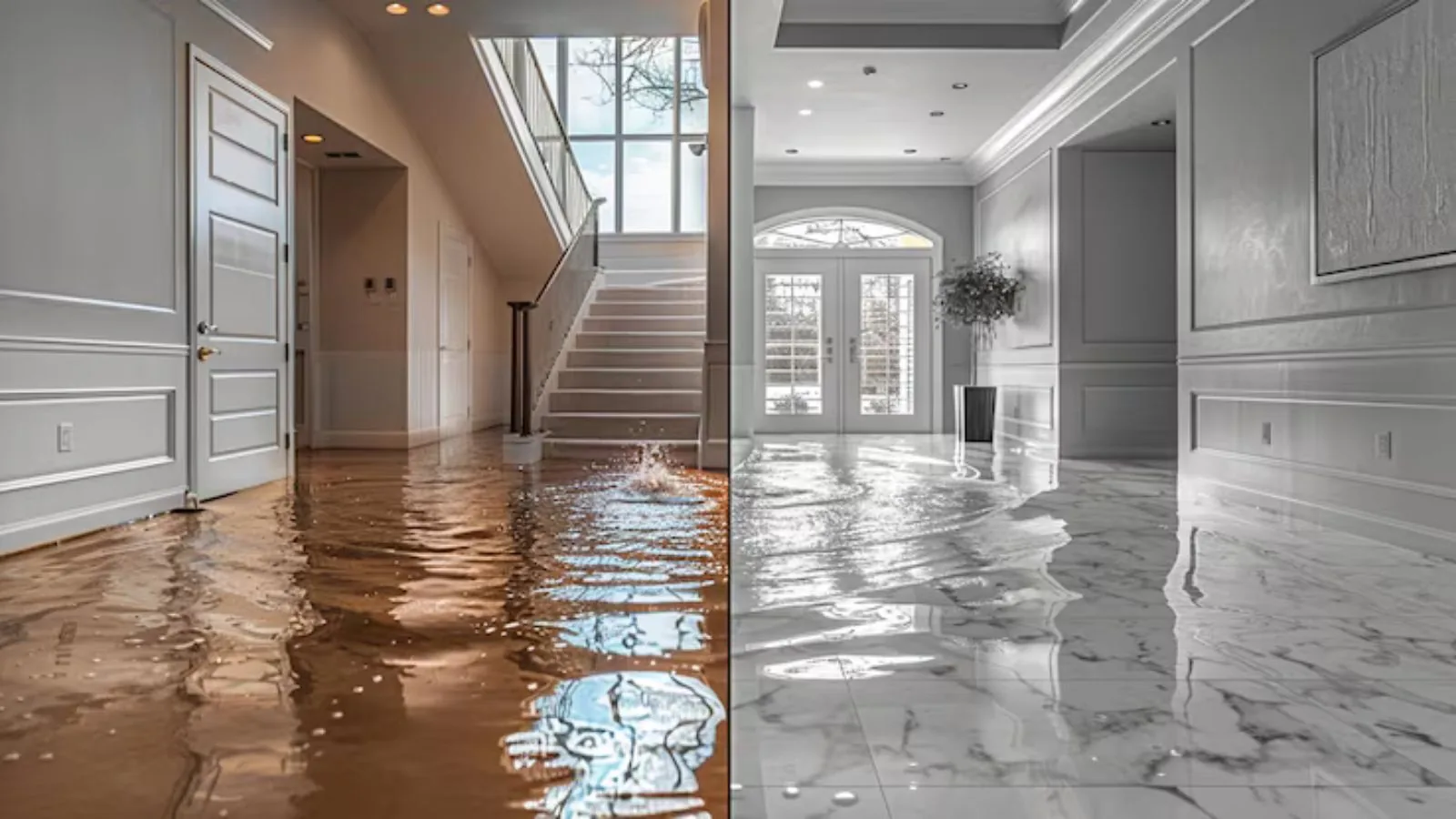
Flood damage restoration is the cleanup and drying of a building after water enters from outside, whether it rises from a creek, seeps up through the ground or runs across the surface. If water is in your Verona home right now, this page covers what to do first and what the work involves. Our 24/7 line is open, and you can call while you are still moving belongings upward.
Flood water is treated differently from a broken pipe because it carries soil, bacteria and runoff. Under the ANSI/IICRC S500 categories it is usually Category 3, which changes what can be dried in place and what has to be removed.
When rising water is an emergency
Treat any water that is moving, rising or touching electrical equipment as an emergency. Stay out of rooms where water reaches outlets, the panel or gas appliances, and call the utility or 911 about electrical or gas risks before you call a restoration line. Do not walk through standing flood water, because you cannot see what is under it.
While you wait for a crew
- Move people and pets to higher ground and keep children out of the water.
- Turn off power only if the panel is dry and you can reach it without stepping into water.
- Lift valuables, papers and medications to a second floor or a high shelf.
- Take photos of the water line before anything moves, because your insurer will want them.
- Do not run a household vacuum or use fans on wet ground-floor wiring.
Same-day response is available when crews are free, and after-hours calls are answered the same way as daytime ones. We do not promise an arrival time, but dispatch will tell you what is realistic when you call.
Why Verona homes flood
Verona sits along Badger Mill Creek and the Sugar River valley, and low lots near them are the first places water collects. Dane County reports that 11 to 15 inches of rain fell on parts of western Dane County on August 20 and 21, 2018, and that the rain overloaded the drainage systems built to carry it. That event showed how quickly a normal-looking storm can become a flood when the ground and the storm sewers are already full.
Whether your own address sits in a mapped flood zone is something only the FEMA Flood Map Service Center can answer. Search your address there, and ask the City of Verona building department about local drainage rules.
Creek and river overflow
Water leaves its channel and enters low yards, garages and ground floors, often carrying silt.
Groundwater seepage
A high water table pushes water up through slab cracks and wall joints without any storm at the surface.
Overland runoff
Heavy rain runs across pavement and grading toward the house faster than drains can take it.
Sewer and drain surcharge
Overloaded municipal lines can push water back into floor drains, which makes the loss Category 3.
How a flood cleanup is done
Call the 24/7 line now. Dispatch will explain what to do while a crew is arranged.
Make it safe
Crews check for electrical and structural hazards, put on protective gear and control how contaminated water is moved.
Extract the water
Pumps and extraction units remove standing water. Water extraction comes before anything else because every hour of soaking spreads moisture.
Remove what cannot be saved
Carpet pad, soaked insulation and porous drywall that touched Category 3 water are usually removed, since they cannot be made clean.
Clean, then dry
Surfaces are cleaned and treated, then air movers and dehumidifiers dry the framing. Details are on the structural drying page.
A flooded basement has its own concerns, from sump failure to finished walls, and the basement water damage page covers those. If the water came from a storm opening in the roof or walls instead of the ground, the storm water damage page is the better fit.
Flood water, insurance and your policy
The Wisconsin Office of the Commissioner of Insurance says most homeowners policies do not cover flooding or seepage through the foundation, and that flood coverage comes from a separate policy such as the National Flood Insurance Program. Sewer backup and sump pump overflow need their own endorsement. The NFIP generally starts 30 days after purchase, so the time to look at coverage is before a storm.
Photograph everything, keep swatches of damaged materials and do not throw out damaged property until your adjuster agrees. Ask your insurer what applies to your policy, and call us for the scope and price explained before work starts.
What affects flood cleanup cost
- Water category, since Category 3 water requires removal of porous materials.
- Depth and duration, which decide how far moisture climbed into walls.
- Square footage affected, including rooms the water reached only through walls.
- Materials involved, such as hardwood, carpet, drywall height and insulation.
- Drying days, which depend on equipment count and weather.
No honest number exists until someone sees the loss. Want your real number? Call (608) 871-6605 and describe the water line.
Flood damage questions
Do you handle flood emergencies at night or on weekends in Verona?
Yes. The dispatch line is answered at all hours, including nights, weekends and holidays. A crew can be sent the same day when one is available, and dispatch will give an honest estimate of timing on the call.
Can flood water be dried in place?
Usually not if it is Category 3. Porous materials that touched flood water, like carpet pad and drywall, are normally removed. Hard materials such as concrete and framing can be cleaned and dried.
Is flood damage covered by homeowners insurance?
Most homeowners policies exclude flooding and foundation seepage. A separate flood policy or an endorsement may apply, so check your policy and call your insurer before work starts.
How do I know if my address is in a flood zone?
Look it up on the FEMA Flood Map Service Center, and ask the City of Verona building department about local drainage rules. We do not guess at zones.