
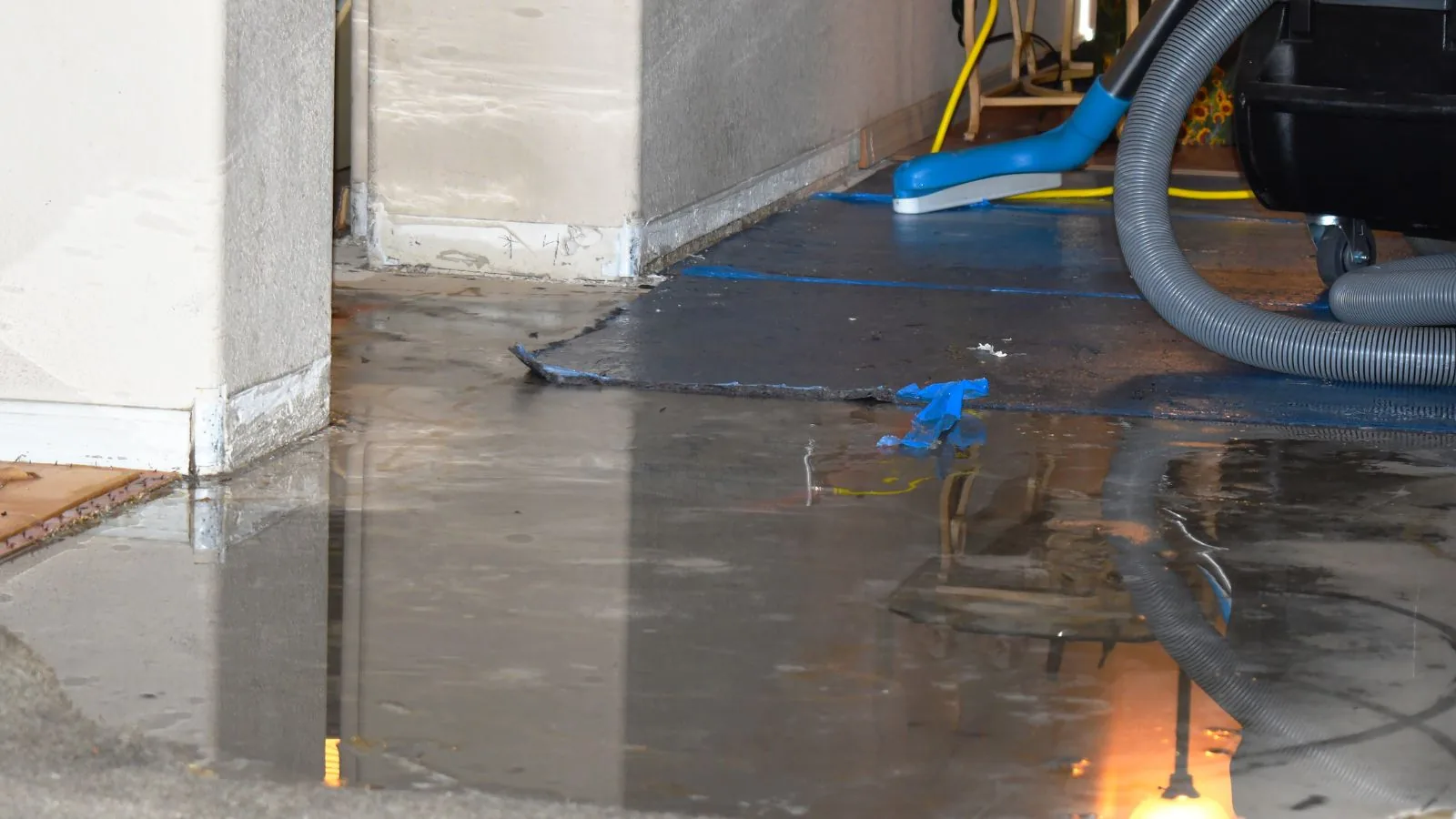
Water extraction is the removal of standing water from floors and low areas using pumps and extraction units, before drying begins. If an inch of water is on your Verona floor tonight, call the 24/7 line first and read this page while you wait. The goal is to take bulk water out fast, because every hour it sits it soaks further into carpet pad, drywall bottoms and subfloor.
Extraction is the first step of the larger job described on our water damage restoration homepage, and it ends where drying and repair begin.
When standing water is an emergency
Standing water becomes urgent when it is still growing, when it covers outlets or appliances, or when it has reached more than one room. Stop the source if you can, usually by closing the main water valve. Turn off power to the wet area only if the panel is dry and easy to reach, and stay away from anything electrical in the water.
Do this while you wait
- Close the main water valve if a pipe is feeding the water.
- Move rugs, books, electronics and wooden furniture out of the wet area.
- Put aluminum foil or plastic under furniture legs on wet carpet to limit stains.
- Keep people and pets out of any water that might be contaminated.
- Photograph the water and the damage before cleanup starts.
After-hours calls are answered the same as daytime ones, and a crew can be sent the same day when one is available. Dispatch tells you what is realistic, and we do not promise an arrival time.
How extraction works
Small amounts are lifted with wet vacuums. Larger volumes need submersible pumps that move water out through hoses, followed by truck-mounted or portable extraction units that pull water from carpet and pad. On hard floors, squeegees and wet vacs gather what is left.
Find the lowest point
Water follows gravity, so the crew places pumps where it pools, such as a basement low spot or a sunken room.
Pump out the bulk
Submersible pumps move large volumes out of the house through hoses to a safe discharge point.
Extract from materials
Extraction units pull water out of carpet, pad and flooring seams so it cannot wick upward into walls.
Check what remains
Moisture meters and thermal imaging show wet areas that look dry. Drying equipment is set only after the bulk water is gone.
Water extraction versus drying
Call the 24/7 line and tell dispatch what the water has touched.
People often expect extraction to finish the job. It does not. Pulling out standing water removes the large volume, but the structure stays wet, and framing and subfloor hold moisture for days. That is why structural drying and dehumidification follows extraction, and it is why readings, not appearance, decide when a job is done.
If the water came from a plumbing failure, the repair belongs to a plumber. The burst pipe page covers the damage side of that failure.
Water extraction in Verona
A Verona house can take on water from a supply line failure, a failed sump pump or a storm. Madison’s 1991 to 2020 normals show 37.13 inches of precipitation in an average year, so wet seasons are routine here, and a sump pump that worked fine in July can fail in a thaw. If your basement has a sump, test it before heavy rain, and ask the City of Verona building department about local drainage rules.
Water in a finished room has different needs than water in a garage. Carpet and pad hold water and need extraction, while a bare concrete floor can be squeegeed and dried much faster.
What affects extraction cost
- The volume and depth of standing water.
- The category of the water, since contaminated water needs protective steps.
- The materials the water reached, such as carpet, pad and hardwood.
- How many rooms and floors are affected.
- Whether drying and repair follow the extraction.
Scope and price are explained before work starts. Call (608) 871-6605 and describe the water for a real number.
According to the EPA’s flood cleanup guidelines, standing water and wet materials should be removed and dried quickly, within 24 to 48 hours where possible.
What to do before the crew arrives
- Do not use a household vacuum on standing water.
- Stay out of water near outlets, cords and the panel.
- Close the water source if you can reach it safely.
- Move belongings off wet floors.
Water extraction questions
Do you handle water extraction emergencies at night or on weekends in Verona?
Yes. The 24/7 line is answered every night, weekend and holiday. Same-day response is available when a crew is free, and dispatch gives a realistic timing estimate on the call.
Can I use a wet vacuum myself?
For a small spill on a hard floor, yes. If water is deeper than an inch, has reached carpet pad or walls, or could be contaminated, a crew has the pumps and extraction units to do it properly.
Will extraction save my carpet?
Sometimes. Clean water caught quickly can often be extracted from carpet and the pad dried or replaced. Contaminated water usually means removal. A crew can tell after checking the water category and readings.
How long does water extraction take?
Bulk extraction is often done within a few hours for an average room, but time depends on volume, access and the materials involved. Drying takes longer and is a separate step.