
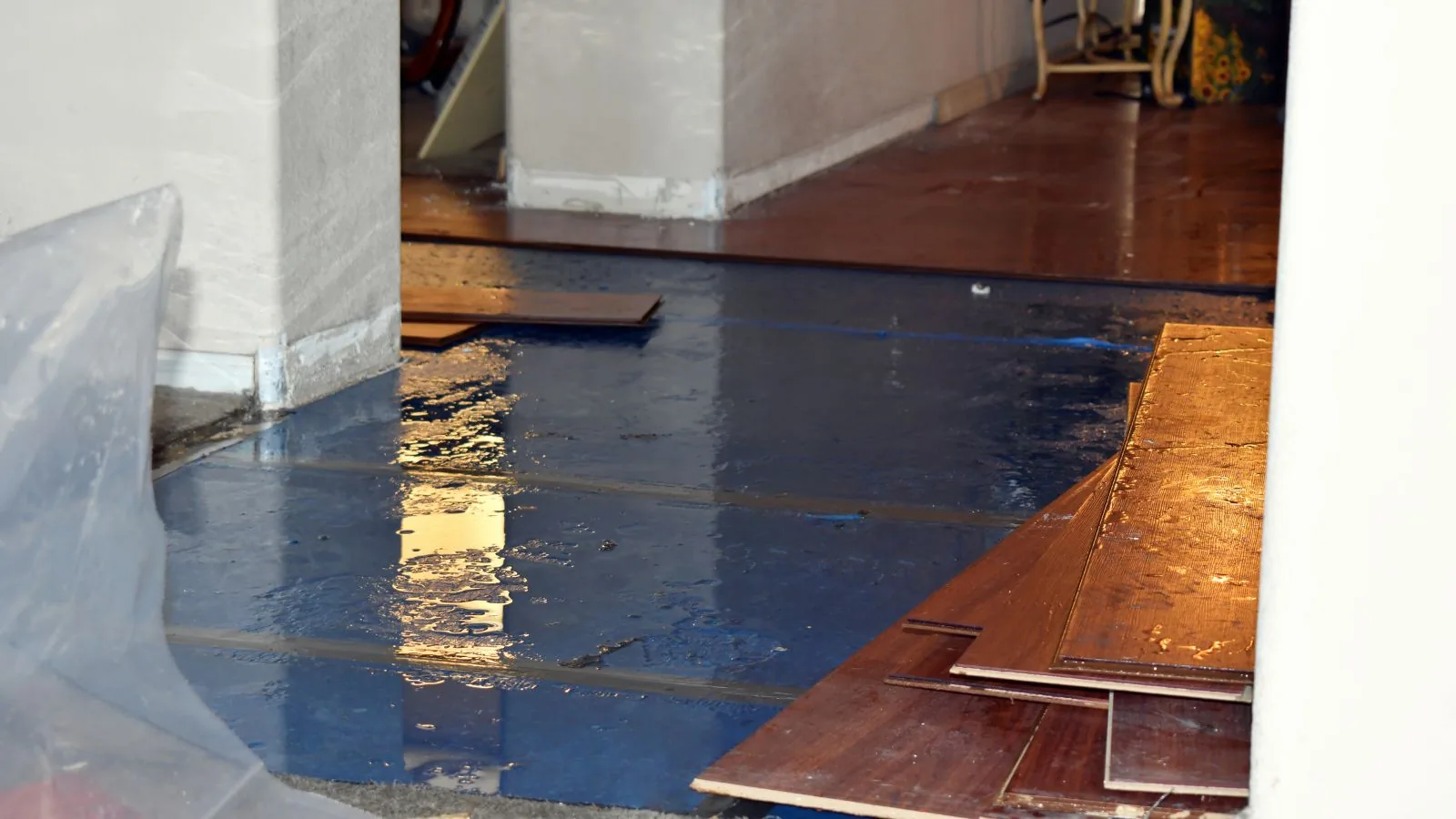
Storm water damage cleanup is the removal of water and drying of the structure after rain, wind or hail lets water into a home. If a storm has opened your roof, flooded your basement or pushed water through a window in Verona, call the 24/7 line. Storms hit many homes at once, so call early.
This page is about water that arrives with a storm. Roof leaks that start inside are on the ceiling page.
After the storm: what to do first
Make sure everyone is safe, and stay away from downed lines and flooded electrical panels. Stop more water from coming in if you can safely do it, such as moving items away from a leak or covering an opening. Photograph the damage before you clean up.
After a storm
- Stay clear of downed lines and standing water near outlets.
- Photograph the damage inside and out.
- Move belongings away from leaks and standing water.
- Cover openings only if you can do it safely from the ground or inside.
- Call your insurer and the 24/7 line.
Dispatch answers nights and weekends. After a large storm, demand rises, and same-day response is available when a crew is free. We do not promise an arrival time.
Verona storm history
An EF-3 tornado struck the Verona area on June 17, 2014, near Country View Elementary, according to the National Weather Service. On August 20 and 21, 2018, 11 to 15 inches of rain fell in parts of western Dane County and flooded areas around Black Earth Creek. Those events show what severe weather can do near Verona.
Madison’s 1991 to 2020 normals show 37.13 inches of precipitation a year and 51.8 inches of snow, so water arrives in many forms.
Roof and window openings
Wind or hail opens a path for rain.
Basement flooding
Runoff and groundwater push water into the lower level.
Gutter and downspout overflow
Water backs up and pours down the walls.
Ice and snowmelt
A rapid thaw sends water into foundations and attics.
How storm cleanup is done
Stay safe, then call the 24/7 line.
Check the structure
Meters and thermal imaging show water in walls, ceilings and insulation.
Repair
Roof, siding and interior repairs follow once dry, often by other trades.
If water came in the lower level, the basement page and the flood damage page add detail.
What affects storm cleanup cost
- How much water entered and how fast it was removed.
- The number of rooms and floors.
- Materials, such as insulation, drywall and flooring.
- Drying days.
- Repair scope, which may include roofing.
Wind and hail damage is often covered by homeowners insurance, while groundwater flooding usually needs a separate flood policy. The Wisconsin Office of the Commissioner of Insurance explains the difference. Want your real number? Call (608) 871-6605.
After a big storm, call early
Large storms create many calls at once. Describe what you can see, how much water there is and whether anyone has been hurt. If an opening is large, a roofer or a board-up service may be needed in addition to drying. We handle the water and the structure, and other trades handle the shell.
Keep receipts for anything you buy to protect the property, such as tarps and plywood. Many policies reimburse reasonable emergency costs.
Documenting storm damage
Photograph the exterior first, then each room. Take wide shots and close ups of ceiling stains, wet walls and standing water. Write down the date and time the storm hit. A simple log of what you saw and when helps your adjuster and any contractor who arrives later.
In Verona, homeowners in neighborhoods such as Hawthorn Hills can read a local guide to roof and gutter leaks.
Storm damage questions
Do you handle storm damage at night or on weekends in Verona?
Yes. Call any hour of the day. A crew is sent the same day when one can be spared. After large storms, call early.
Do you repair the roof?
No. Roofers fix the roof. We remove the water and dry the structure.
Does homeowners insurance cover flood damage?
Usually not. Flood needs its own policy. Look up the FEMA flood map and talk to your agent.
Should I wait for the adjuster before cleanup?
Photograph everything first. Water that sits adds damage, so ask your insurer how to proceed.