
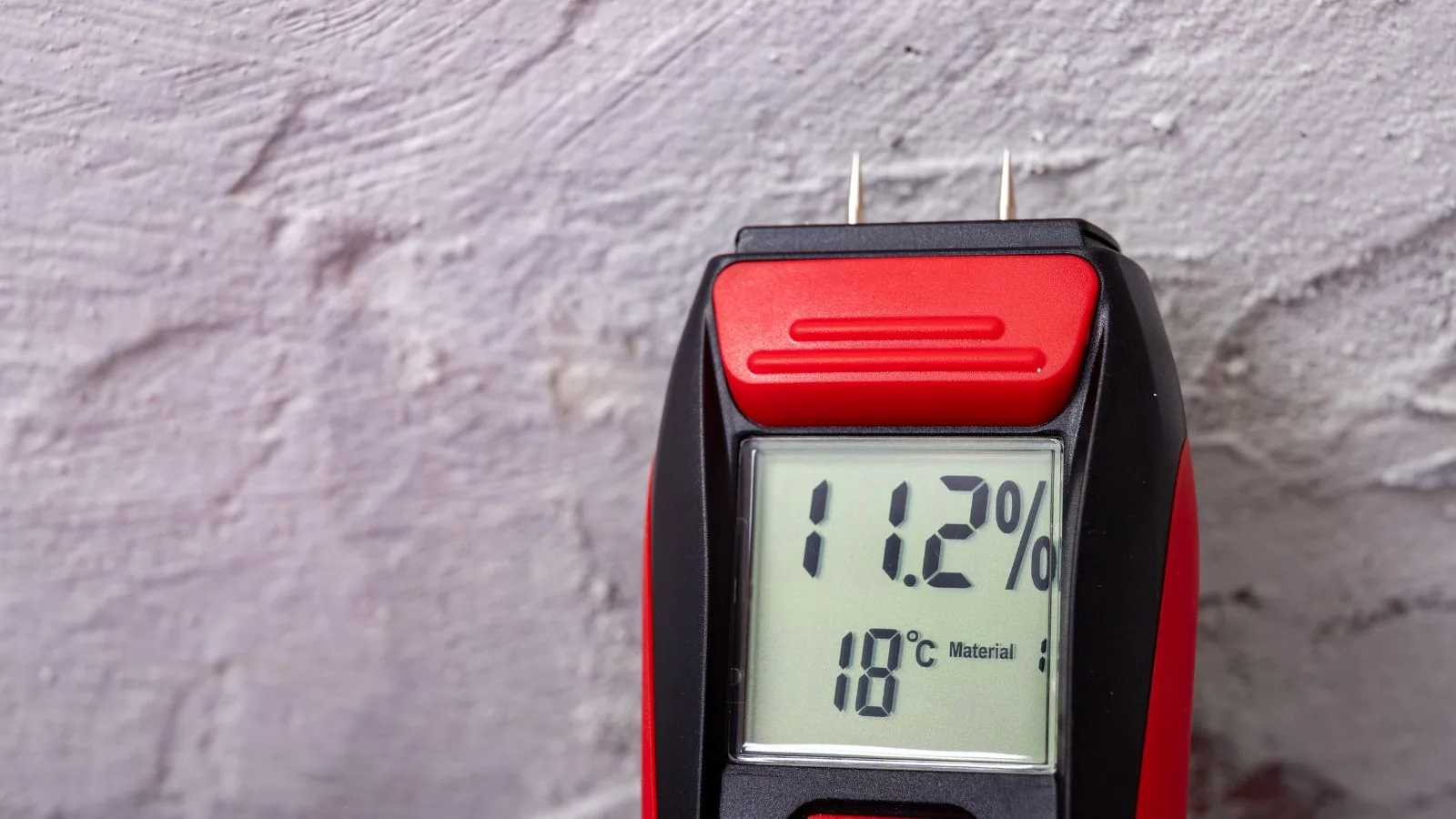
Structural drying is the controlled removal of moisture from framing, subfloor, drywall and insulation using air movers, dehumidifiers and moisture readings. In Verona, WI, it is the part of water mitigation that decides whether a wet house recovers or grows mold. Drying takes days, and it is measured with meters, not guessed by touch.
This page also explains the term water mitigation, which means the steps that limit damage and begin drying before repairs.
My wall is wet and I do not know why
Many people reach this page with a symptom, not a trade name. A wall that feels cool or damp, a floor that has started to cup, a musty smell in one room or paint that bubbles all point to moisture inside a building material. Structural drying is how a crew finds out how far it goes and removes it.
The trade names, moisture mapping and dehumidification, sound technical, but the idea is simple. Measure where the water is, then move dry air through the space until the materials return to normal.
How moisture mapping works
A crew uses a pin or pinless moisture meter on drywall, wood and concrete, and a thermal camera to spot cooler wet areas behind surfaces. Readings are recorded on a sketch of the rooms. The same points are measured every day, so the numbers show whether drying is working.
Without readings, a house can look dry on the surface while the sill plate, subfloor or insulation stays wet. That is how hidden mold starts.
Moisture meters
Show the moisture content of drywall, wood and concrete at each point.
Thermal imaging
Reveals cool, wet patches behind walls and under floors without cutting into them.
Air movers
Push dry air across wet surfaces to evaporate moisture.
LGR dehumidifiers
Pull moisture out of the air so drying keeps going instead of stalling.
Air movers and dehumidifiers work together
Call and ask about moisture mapping for your rooms.
Air movers speed evaporation by moving air over wet surfaces. Dehumidifiers then capture the water vapor, because humid air cannot take on more moisture. If air movers run without enough dehumidification, the room just recycles damp air.
Equipment is sized to the room, the water category and the materials. A cold, damp Wisconsin week slows drying, so jobs in November often take longer than the same job in August.
Map and plan
Readings show where equipment goes and which materials must be removed.
Set equipment
Air movers and dehumidifiers are placed to move air along wet surfaces and capture vapor.
Check daily
The crew returns, measures the same points and adjusts equipment.
Confirm dry
Readings reach the dry standard for each material, and equipment is removed.
Water mitigation in practice
Water mitigation starts with extraction, includes removal of materials that cannot dry, and runs through structural drying. Repair comes after, such as new drywall for a ceiling or new flooring.
ANSI/IICRC S500 is the published industry standard for professional water damage restoration, and drying goals and monitoring are part of it. Ask any company whether its crews work to it.
How long does drying take?
Many residential jobs take several days, and some take longer. Thick materials such as hardwood, subfloor and concrete dry slowly. The EPA’s flood cleanup guidance advises drying wet materials within 24 to 48 hours to limit mold, which is why equipment is set early, not after a few days of waiting.
A drying plan in Verona also accounts for weather. Madison’s January mean of 19.4°F means cold, closed-up houses, and winter humidity inside can behave differently than in summer.
What affects drying cost
- Number and size of rooms affected.
- Material types and thickness.
- Water category and any removal steps.
- Equipment count and days on site.
- Monitoring visits and documentation.
You hear the scope and price first, then work begins. Insurance may cover drying after sudden damage, and your insurer makes that decision. Want your real number? Call (608) 871-6605.
What to do while drying equipment runs
- Do not unplug or move the equipment.
- Do not change dehumidifier settings or switch units off for the noise.
- Keep doors and windows closed in the drying area unless the crew says otherwise.
- Tell the crew if a cord, hose or unit is damaged.
Drying questions
Can I rent a dehumidifier and dry it myself?
For a small, clean spill, sometimes. For wet walls, subfloor or insulation, the equipment and readings matter, and a household unit often cannot keep up.
How do you know when it is dry?
Moisture readings are compared with a dry standard for each material, and the same points are checked each day.
Is the noise and electricity use normal?
Yes. Air movers and dehumidifiers run around the clock during drying, which adds noise and a visible bump to your power bill.
Does drying stop mold?
Fast drying lowers the risk because mold needs moisture. It cannot be promised that mold will never appear, and health questions belong to a physician.