
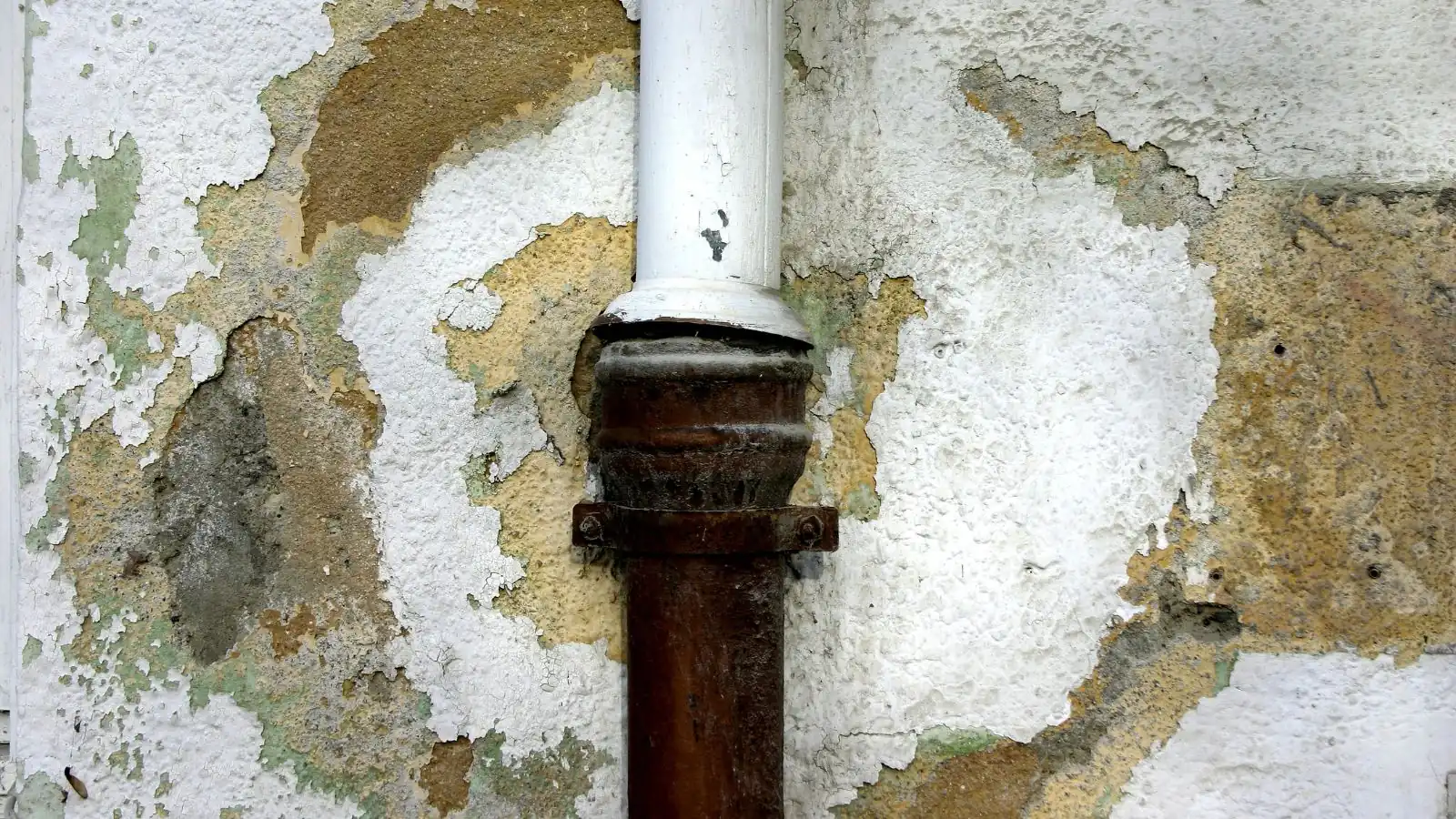
Wall and drywall water damage repair is the drying, cutting out and replacement of wet gypsum board, baseboards and the framing behind them. If a wall in your Verona home is stained, soft or peeling, call the 24/7 line or read on. Drywall absorbs water like a sponge, and it stays wet longer than it appears.
This page covers walls and baseboards. Ceilings have their own page, and so do kitchens and appliance leaks, which often cause the wall damage.
What wall damage looks like
Stains
Brown rings or yellow patches show where water passed through the paper face of the drywall.
Soft spots
Drywall that gives under a finger has lost its strength and usually needs replacement.
Bubbling paint
Moisture pushes paint off the surface, and bubbles that return after repainting mean water is still arriving.
Swollen baseboards
Trim absorbs water at the bottom of the wall and swells or separates.
Why walls hold water
Gypsum board is a paper-faced mineral panel. It wicks water upward from the bottom, so a floor leak can climb several inches into the wall. Inside the cavity, insulation traps moisture against the framing and keeps it there.
That is why surface checks fail. A wall may feel dry on the face while the lower cavity stays wet, and only readings and thermal imaging show it.
How wall repair is done
Call and ask about moisture readings behind it.
Find and stop the source
The pipe, appliance or leak must be fixed before drying matters.
Open the wall if needed
A flood cut removes the lower wall, often 2 feet above the floor, to expose the cavity. Cutting above the wet line is common.
Dry the framing
Air movers and dehumidifiers dry studs and plates. See structural drying and dehumidification for how readings work.
Patch and finish
New drywall, tape, texture, primer and paint bring the wall back, and trim is replaced or reset.
A small clean stain may only need drying and sealing. A saturated wall, or one that touched contaminated water, is cut out. Insulation that has gotten wet is replaced.
Do I have to open the wall?
Not always, but often. If readings show a wet cavity, drying through the face alone is slow and incomplete, and opening the wall speeds drying and lets the framing be checked. If the wall is dry and the stain is old, sealing and painting may be enough.
A stain that returns after painting is a sign of a leak that is still active. Do not keep repainting. Find the source.
When water in a wall is an emergency
Treat water running inside a wall as urgent, especially near outlets or switches. Shut off the water source and turn off power to the affected circuit only if the panel is dry and easy to reach. If you cannot do that safely, call the utility or 911. After-hours calls are answered, and a crew can be sent the same day when one is available.
Where wall leaks start
The usual sources are a pipe inside the wall, an upstairs fixture, a window or roof leak, or water that wicked up from a wet floor. If the water came from a burst supply line, see the burst pipe page. Verona winters bring ice and thaw cycles, and Madison’s climate normals show 51.8 inches of snow a year, so exterior walls and windows take a beating.
What affects wall repair cost
- Height and length of wall affected.
- Whether insulation and framing need replacing.
- Water category.
- Trim, paint and texture matching.
- Drying days and equipment.
Insurance may cover sudden wall damage, and slow leaks are often excluded. Check your policy. Want your real number? Call (608) 871-6605.
ANSI/IICRC S500 is the published standard for professional water damage restoration. When a wall has been wet, you can ask any company whether its crews work to it.
What to do about a wet wall
- Do not cut into a wall near wiring or pipes.
- Turn off power to a wet wall only if the panel is dry.
- Do not paint over a damp wall.
- Photograph stains and bubbles with a ruler for scale.
Wall and drywall questions
How high does water climb in drywall?
Water wicks upward and can climb several inches above the visible line. Moisture readings show the true height.
Can wet drywall be saved?
Sometimes, if it is clean water and caught early. Saturated or contaminated drywall is usually cut out.
Will mold grow behind the wall?
It can if the cavity stays damp. EPA guidance advises drying within 24 to 48 hours. Health questions belong to a physician.
Do you paint after repair?
Repair covers patching, texture and paint to match, with scope and price explained before work starts.