
A water damage claim goes better when the first hour is organized. The photos you take, the notes you keep and the order in which you call people all shape how smoothly it goes. This is a general guide for homeowners in Verona, WI and nearby towns. It is not legal advice, and your policy sets the actual rules.
Step by step: from the first hour to the adjuster visit
Make it safe
Close the water valve, stay away from wet outlets and call the utility or 911 if the electrical panel is wet.
Document before you touch
Take wide shots of each room, close shots of the source and damage, and a short video walking through the space.
Notify your insurer
Call your agent or the company claims line. Write down the date, time, name and claim number.
Mitigate the damage
Remove standing water and start drying. Policies expect reasonable steps to prevent further loss.
Keep records
Save receipts, written scopes and every message about the claim.
Meet the adjuster
Show the source, the damage and your photos, and ask what documentation is still needed.
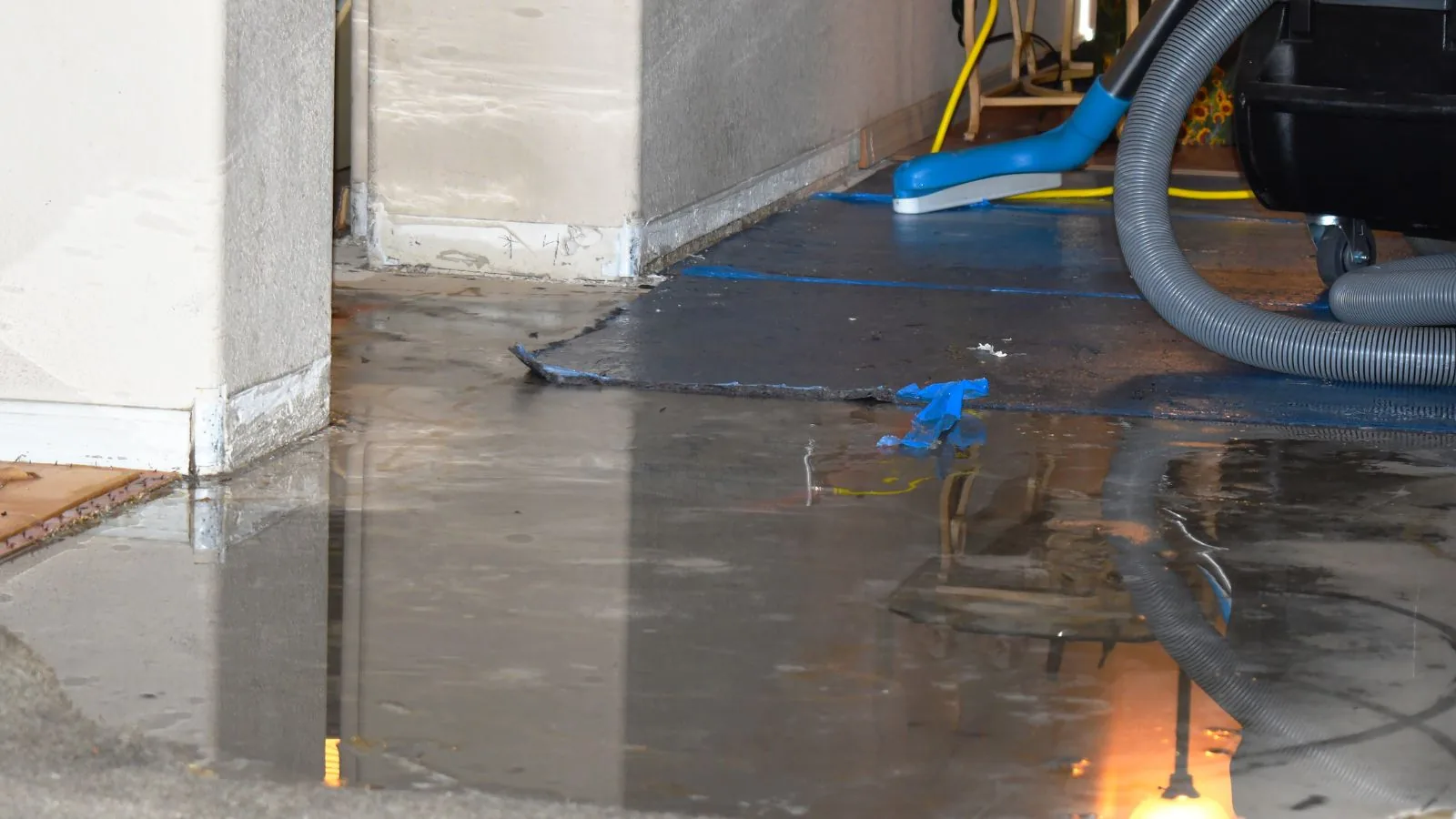
Mitigation is the step people hesitate over. Dispatch can send a crew the same day when one is available to remove water and begin drying, and that work is documented with photos and moisture readings your insurer may ask for.
What to photograph
- The source of the water, such as the pipe, appliance or opening.
- Water lines on walls, stains on ceilings and standing water on floors.
- Damaged belongings, with a close shot of any labels or serial numbers.
- Moisture meter readings and the equipment placed, if a crew is on site.
- The exterior, if the cause was a storm.
Inventory and documents
Call the 24/7 line and tell dispatch what you are looking at.
Write a room by room list of damaged items with approximate age and value. Keep receipts where you have them. Photos from before the loss help, and many people find old pictures on a phone or social account. Keep damaged items until the adjuster has seen them or has told you they can go.
Working with the adjuster
The adjuster inspects the damage and estimates the cost under your policy. You can ask questions about how the figures were reached. A written scope of work from the restoration company is not a coverage decision, but it shows what is wet and what drying involves.
If you disagree with the estimate, ask for the reasoning in writing and raise it with the company. The state regulator can also help when a dispute stalls.
Wisconsin claim resources
The Wisconsin Office of the Commissioner of Insurance publishes consumer guidance on homeowners claims and takes complaints about insurers licensed in the state. Contact it if you cannot resolve a dispute with your company.
After a large local event such as the August 20 and 21, 2018 flooding in western Dane County, many claims arrive at once, so call early and keep a written timeline of every contact.
Typical delays and how to avoid them
| Delay | Why it happens | What helps |
|---|---|---|
| Late notice | The insurer was told days after the loss | Call as soon as the water is stopped. |
| Missing photos | Damaged items were thrown out first | Photograph, then discard only what the adjuster allows. |
| Unclear scope | The restoration estimate lacks detail | Ask for a written scope with rooms and materials. |
| Gaps in drying records | Equipment was removed early or not logged | Keep the daily moisture log. |
A written scope should list rooms, materials and drying days. Our page on structural drying explains what the daily readings mean. For lower level losses, the basement page explains the extra steps with slabs and finished walls.
If your home is in Oregon or Mount Horeb, the claim process is the same. Only the crew travel changes.
A simple record that helps every claim
Keep one notebook or phone note for the claim. Write each call with the date, the name of the person and what was said. Add the claim number to the top of the page. When months pass, this log answers questions nobody remembers, such as who approved the drying and when the adjuster visited.
Keep digital copies of every receipt, since paper in a wet house may not survive. Back up photos to a second place.
Keep your own copy of the written scope and the daily moisture log from the drying crew. These two papers show what was wet, what was removed and how the structure was proven dry, which is what an adjuster needs to see.
The Wisconsin Office of the Commissioner of Insurance publishes consumer guidelines on claims. According to its guidance, you can contact it if a dispute with your insurer stalls.
Claim questions from Verona homeowners
Should I call my insurer or the restoration company first?
Make the area safe, then call both. Your insurer needs notice, and the water should not wait for the paperwork.
How long do I have to file a Wisconsin water claim?
Policies set their own notice and filing deadlines, so read yours and call promptly. Ask the Office of the Commissioner of Insurance if you are unsure of your rights.
Can I start repairs before the adjuster visits?
Mitigation, such as water removal and drying, is expected. Hold off on permanent repairs and on discarding large items until the adjuster has seen them.
What if the adjuster’s estimate is lower than the scope?
Ask for the differences in writing, send your photos and moisture logs, and ask the restoration company for a clarified scope.